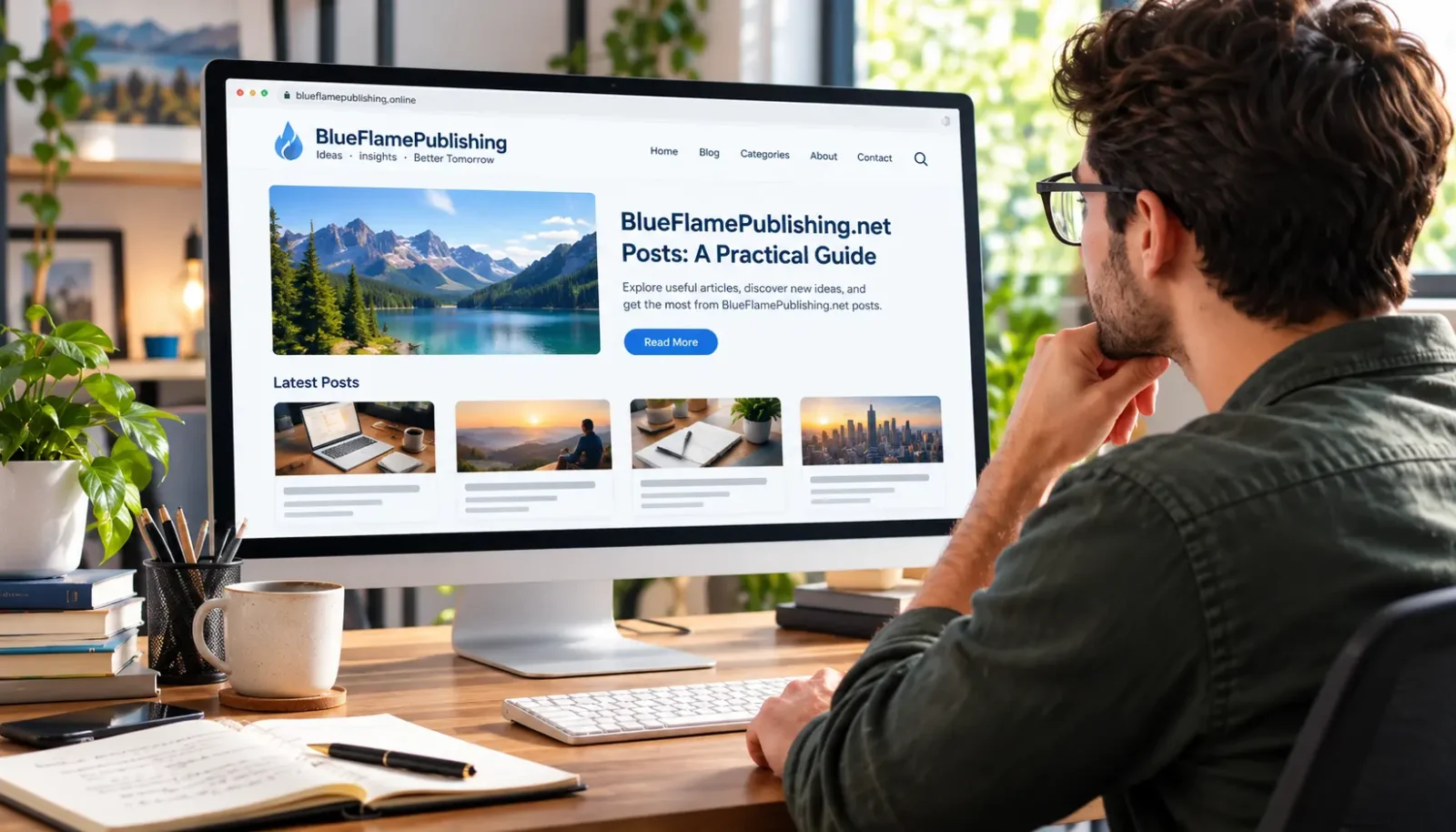
BlueFlamePublishing.net Posts: A Practical Guide to Finding and Understanding Articles
Finding useful online articles can make it easier to learn about new topics, discover ideas, and understand different aspects of digital publishing. If you are searching for blueflamepublishing.net posts, you may want to explore articles associated with the website, understand what kind of content is available, or learn how to find relevant posts.
This guide explains how to approach the search, evaluate the information you find, and make the most of online publishing resources. It also covers a few practical tips for readers, bloggers, and website owners.
What Are BlueFlamePublishing.net Posts?
The phrase blueflamepublishing.net posts refers to articles or other published content that readers associate with the BlueFlamePublishing.net domain.
However, a website’s name alone does not confirm its current content, ownership, publishing schedule, or available categories. Readers should visit the relevant website directly to check its current pages and verify that the content matches their interests.
Depending on the material actually published, website posts may provide information, explain a topic, share practical advice, or introduce readers to a particular subject.
How to Find BlueFlamePublishing.net Posts
If you want to locate specific articles, start with these simple steps.
Visit the Website Directly
Enter the domain into your browser and check whether the website is accessible. Look for its homepage, blog section, category pages, or article archive.
If the domain does not open, avoid assuming that the website has permanently closed. Check the spelling and try again later.
Look for Relevant Categories
If the website has category pages, use them to narrow your search. Categories can help you find related articles without browsing every post individually.
For example, someone interested in online marketing might look for articles about content creation, blogging, search engine optimisation, or digital publishing—provided those categories are available on the site.
Check Publication Dates
When you find an article, check its publication or update date if one is provided. This is particularly important for topics involving technology, online tools, business practices, or search engine optimisation.
An older article may still offer useful background information, but its advice may need to be checked against more recent information.
How to Evaluate an Online Article
Not every article provides the same level of accuracy or practical value. Before relying on a post, consider the following factors.
| What to check | Why it matters |
|---|---|
| Author information | Helps you understand who created the content |
| Publication date | Shows when the information was published |
| Supporting sources | Helps you verify important claims |
| Clear explanations | Makes the topic easier to understand |
| Practical examples | Helps you apply the information |
| Updated information | Reduces the risk of relying on outdated advice |
Be especially careful with articles that make strong claims without evidence, promise guaranteed results, or encourage you to share sensitive information.
For important decisions involving money, privacy, security, or legal matters, compare the article with reliable primary sources.
How Bloggers Can Learn from Publishing Websites
Readers are not the only people who can benefit from exploring online articles. Bloggers and website owners can also study published content to improve their own work.
Understand Search Intent
Before writing an article, consider what the reader actually wants to know.
For example, someone searching for a publishing platform may want to understand its purpose, find its articles, or learn whether it accepts submissions. These are different needs and may require different content.
A helpful article answers the main question early instead of making readers scroll through unnecessary background information.
Organise Content Clearly
Use a descriptive H1 heading, meaningful H2 and H3 subheadings, short paragraphs, and relevant examples. This structure makes an article easier to read on both desktop and mobile devices.
Each section should contribute something useful rather than repeating the same point in different words.
Provide Original Value
When researching other websites, use them to understand a topic rather than copying their articles.
Add your own explanations, examples, experience, and verified information. If you refer to another publisher’s research or specific claims, cite the original source where appropriate.
Original, helpful content gives readers a reason to visit your website and return for future articles.
Keep SEO Natural
Search engine optimisation should help readers discover relevant content, not make the writing awkward.
For an article targeting the phrase “blueflamepublishing.net posts,” use that phrase where it naturally fits, such as the title or introduction. Related expressions can appear in suitable headings and body text when they improve clarity.
There is no need to repeat the exact keyword in every paragraph.
Is BlueFlamePublishing.net the Same as BlueFlamePublishing.online?
The two domain names are different:
- BlueFlamePublishing.net uses the
.netdomain extension. - BlueFlamePublishing.online uses the
.onlinedomain extension.
Similar names do not automatically establish that two websites have the same owner, content, or purpose.
If you are researching either website, check the exact domain in your browser and review its available contact, about, and editorial information. Do not assume that an article published on one domain is also available on the other.
This distinction is particularly important when looking for a specific article, checking the source of a claim, or contacting a publisher.
Tips for Getting More Value from Online Posts
Use these practical habits when exploring publishing websites:
- Start with a clear question: Know what information you want before browsing.
- Use targeted searches: Combine the website domain with a relevant subject.
- Check the source: Confirm important claims through reliable references.
- Save useful resources: Bookmark articles you may need again.
- Compare multiple perspectives: One article may not provide the complete picture.
- Avoid unnecessary downloads: Be cautious with unfamiliar files and links.
- Respect original work: Credit authors and publishers when referencing their material.
These habits can help you research more efficiently while reducing the risk of relying on inaccurate or outdated information.
Frequently Asked Questions
What are blueflamepublishing.net posts?
The term refers to articles or other published content associated with the BlueFlamePublishing.net domain. The website itself should be checked to confirm its current content and available posts.
How can I find articles on BlueFlamePublishing.net?
Visit the domain directly and explore any available blog, archive, or category pages. You can also search Google or another search engine using site: blueflamepublishing.online
Are BlueFlamePublishing.net and BlueFlamePublishing.online the same website?
They are different domain names. Their relationship, ownership, and content should be verified through reliable information from the websites themselves.
Can I trust information published on a blog?
Trust depends on the article, its author, the quality of its evidence, and whether its information is current. Check important claims against authoritative sources before relying on them.
How can bloggers create better posts?
Focus on the reader’s question, use clear headings, provide accurate information, include useful examples, and avoid copying existing content. Natural SEO and a good reading experience should support each other.
Does using a keyword guarantee higher Google rankings?
No. Including a relevant keyword helps clarify a page’s topic, but rankings depend on many factors. Helpful content, relevance, usability, technical accessibility, and competition can all influence search visibility.
Conclusion
Searching for blueflamepublishing.net posts is a useful starting point if you want to explore articles associated with that domain. Visit the website directly, use targeted searches, and check the quality and freshness of the information before relying on it.
For bloggers and website owners, the broader lesson is simple: create original, well-organised content that answers real questions. Clear writing, accurate information, and a reader-first approach are more valuable than repeating keywords simply to improve SEO.